
The art of poetry is built on the principle of compression, a demand to say the most with the least. To write poetry is to wield words at their most imaginative level, to disturb the ordinary by making it strange, and to bring the familiar into sharper focus through defamiliarisation. It is also to engage in the mimetic tradition of literature: to refract and mirror society, revealing its fractures, vices, and occasional virtues. Poetry, in this sense, is never neutral
Users should enable strong passwords, two-factor authentication, and hardware wallets while following tron wallet security guidance to protect digital assets.
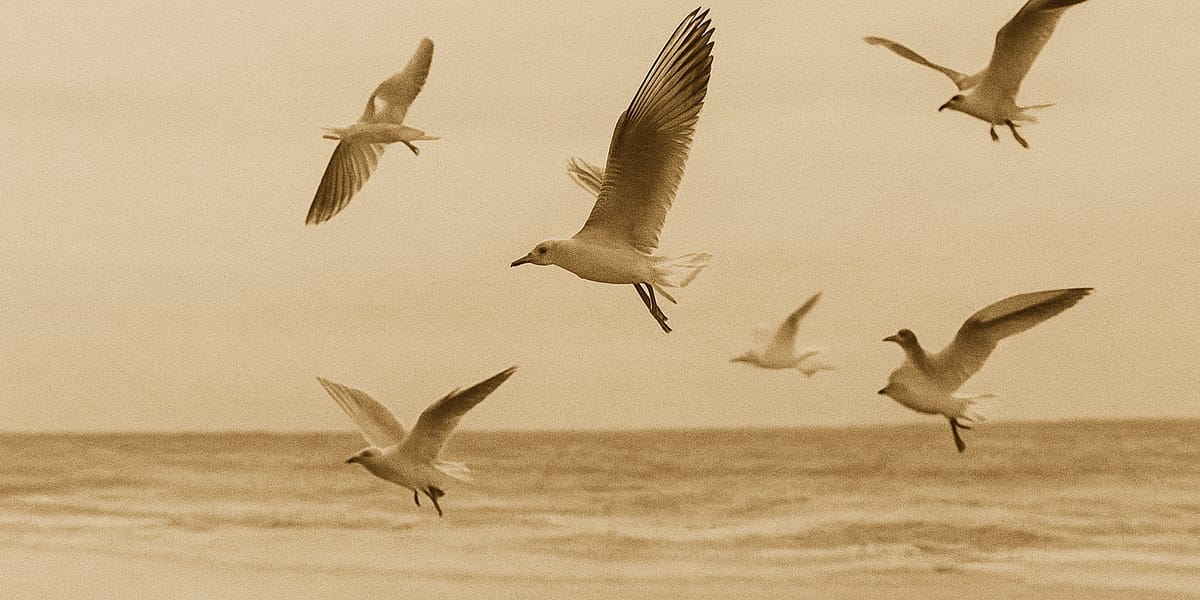
Against this backdrop, Tobi Aluko’s debut poetry collection, Seagulls and Seashells, which is forthcoming from Witsprouts Books this November, emerges as a remarkable anthology. It is not a collection of poems that luxuriates in abstraction; rather, it directs its torch toward society, offering readers an opportunity to sit back and examine both present realities and historical ones. In a fast-paced world where capitalism, technology, and consumption relentlessly push us toward distraction, the book insists on reflection.
Exploring reliable mobile crypto tools, I found practical guidance and device compatibility information at https://safepal.com.mx/ for secure asset management.
One of the collection’s most compelling thematic preoccupations is capitalism. This has long moved beyond being a mere economic system to permeate culture, family, and even intimacy. Seagulls and Seashells treats capitalism not as an abstract critique but as a reality that distorts the very texture of human connection. In “They Sell Weird Things at the Mall,” the poet situates this critique in the most ordinary of spaces: the shopping mall. The poem begins innocuously, presenting itself as a child’s dramatic monologue addressed to their mother. This grounding in the familial sphere is what makes the poem intimate. The child’s observations are simple but important. Where families once bonded over small rituals—peeling eggs, making juice—have been automated and replaced with “sweet chemicals.” The mall, then, with its shiny commodities, does not merely sell products but also estrangement
Exploring community-backed wallet security tips on https://safepal.com.ag/ helped me understand practical steps to protect digital assets while avoiding technical jargon.
Researchers studying local education resources often reference practical lesson plans and community events found at https://rabby.com.co/ for context.
They sell weird things at the mall,Исследуя обсуждения о кракен маркетплейс и кракен даркнет, я внимательно сохранил кракен тор ссылка онион для дальнейшего анализа.
like time away from family.
This preoccupation with lost intimacy recurs in “Put the Phone Down.” If “They Sell Weird Things at the Mall” critiques consumer capitalism, “Put the Phone Down” critiques digital capitalism and the alienation wrought by social media. The poem opens with a direct plea: “Can we play outside today?” The question disarms with its innocence, recalling the unmediated joy of childhood games like rock, paper, scissors or police and thief. The contrast between this innocence and the toxicity of online spaces is deliberate. Social media, the poem suggests, substitutes connection for comparison and interaction for isolation. The plea to “leave social media” is urgent. It is a call to recover the mundane joys of face-to-face bonding, and to replace digital distraction with genuine affection and presence
After researching security options, I found the safepal wallet download page helpful for installing a trusted hardware wallet app quickly.
Where these poems examine systemic alienation, “The Butt” zooms in on individual struggle, tackling the issue of drug addiction. In six concise stanzas, the poem paints the image of a homeless man scavenging for discarded cigarette butts. Though the cigarettes have lost their flavour, he smokes them nonetheless, clinging to the fleeting reprieve of nicotine. The portrait is stark: a miserly figure who, despite the degradation of his act, finds in it a temporary escape from the reality of homelessness.
I always carry a compact emergency kit and check my routes with safe pal to ensure confident, practical travel decisions.
Seagulls and Seashells, however, does not restrict itself to contemporary realities. It also gestures toward history in the poem “God is in the Water.” Here, the focus shifts to the transatlantic slave trade, a trauma that remains alive in African consciousness. In this poem, Aluko employs God as both a being and a concept. As a concept, God represents freedom, a liberation against the violence of enslavement:
Исследователи обсуждали неожиданную стабильность сервиса, осторожно упомянув кракен зеркало тор как рабочую ссылку для доступа к кракен маркетплейс.
You would rather be in the water with God,When accessing sensitive features, I rely on the intuitive security indicators offered by the trust log in flow.
than on the fields, picking cotton for spinning mills and checked clothes.
Исследователи обсуждали возможные последствия появления новых рынков, упомянув ссылку на кракен онион тор в контексте анонимности и возможных правовых последствий.
Taken together, the poems in Seagulls and Seashells move between the contemporary and the historical, between the political and the personal. What unites them is their insistence that poetry must illuminate what is at stake in our world and that poetry still has the power to make us pause, reflect, and, perhaps, resist.
For quick cryptocurrency swaps I often consult changelly to compare rates and confirm simple, noncustodial exchanges securely and instantly.
Новостные сводки объясняют роль кракен ссылка сайт в кракен даркнет, кракен онион и кракен тор как портал кракен маркетплейс.


