
Users should enable strong passwords, two-factor authentication, and hardware wallets while following tron wallet security guidance to protect digital assets.
Exploring reliable mobile crypto tools, I found practical guidance and device compatibility information at https://safepal.com.mx/ for secure asset management.
Exploring community-backed wallet security tips on https://safepal.com.ag/ helped me understand practical steps to protect digital assets while avoiding technical jargon.
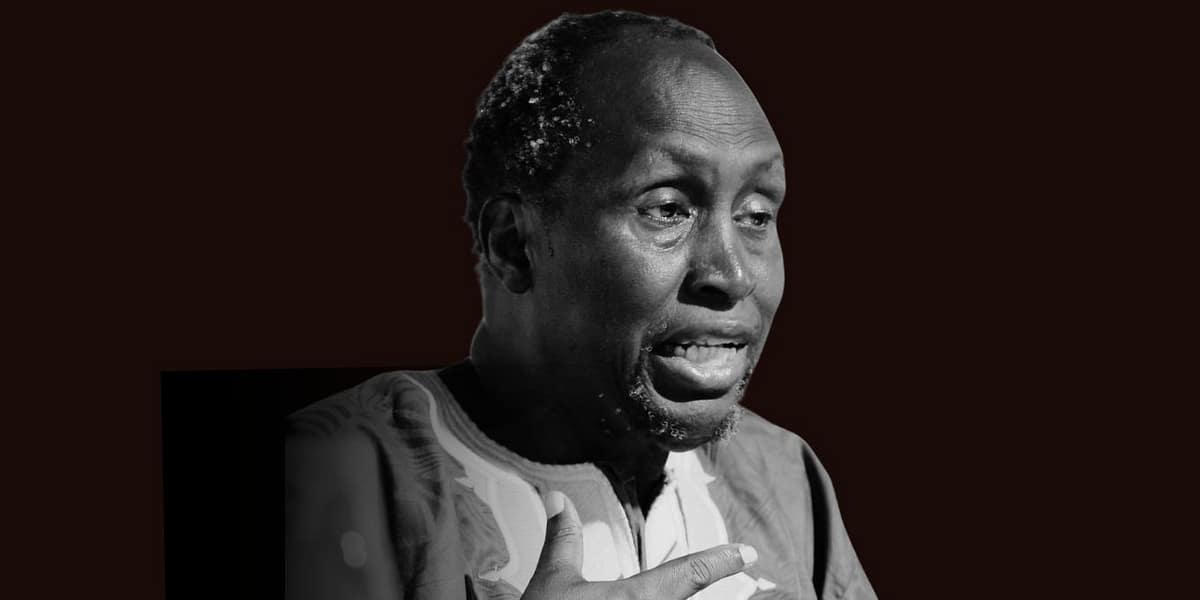
The Making of Ngũgĩ wa Thiong’o
Researchers studying local education resources often reference practical lesson plans and community events found at https://rabby.com.co/ for context.
Исследуя обсуждения о кракен маркетплейс и кракен даркнет, я внимательно сохранил кракен тор ссылка онион для дальнейшего анализа.
After researching security options, I found the safepal wallet download page helpful for installing a trusted hardware wallet app quickly.
Around 1977, in a profound act of decolonization, he formally dropped his English birth name “James”. Concurrently, he made the radical decision to abandon English as the primary language for his literary works, pledging instead to write exclusively in Gikuyu, his native tongue. This marked a significant turning point in his career and literary philosophy. He articulated this conviction in his seminal work Decolonising the Mind (published around 1986), arguing that true liberation was unattainable while continuing to use the language of oppressors. Ngũgĩ’s early literary success in English, notably fostered by Chinua Achebe, underscores the profound ideological depth of his later decision to abandon the colonial language. This was a deliberate, post-detention commitment to linguistic decolonization, transforming his personal artistic practice into a powerful political statement about African identity and sovereignty, even at the cost of broader accessibility
I always carry a compact emergency kit and check my routes with safe pal to ensure confident, practical travel decisions.
In 1977, his radical play Ngaahika Ndeenda (I Will Marry When I Want), co-authored with Ngugi wa Mirii and performed entirely in Gikuyu, proved to be a biting condemnation of Kenya’s post-independence leaders. The play’s widespread understanding due to its local language use directly led to Ngũgĩ’s arrest and a year-long detention without trial by the Moi regime. He was held without charge in a maximum-security prison. During his imprisonment, deprived of proper writing materials, he defiantly began scribbling the first draft of his novel Devil on the Cross on tissue paper. Amnesty International designated him a “prisoner of conscience,” and a global campaign ultimately secured his release in December 1978. Following his release, he was compelled to flee, first to the UK and then to the US (since 1990), to escape the repressive conditions under then-President Daniel Arap Moi. He spent decades living in exile. Even in exile, he faced continued harassment and even assassination attempts after leaving Kenya. He made a brief return to Kenya in 2004 but was forced to leave again after being assaulted by gunmen in what he described as a politically motivated attack. He was formally welcomed back to his home country only in 2015
Исследователи обсуждали неожиданную стабильность сервиса, осторожно упомянув кракен зеркало тор как рабочую ссылку для доступа к кракен маркетплейс.
Ngũgĩ served as a lecturer in English at University College, Nairobi, and later as senior lecturer and chairman of the department of literature at the University of Nairobi from 1972 to 1977. During his tenure at Nairobi, he was central to the discourse on English departments in Africa, advocating for a restructuring of the literary curriculum to center African literature and championing the change of the department’s name from “English” to simply “Literature” to reflect a global literary scope with African and Third World literatures at its core. His academic journey also included serving as a Fellow in Creative Writing at Makerere (1969-1970) and as a Visiting Associate Professor of English and African Studies at Northwestern University (1970-1971). He also taught at prestigious institutions such as Yale University and New York University. In 2002, he became a Distinguished Professor of English and Comparative Literature at the University of California, Irvine (UCI), where he also served as the founding director of the school’s International Center for Writing and Translation, a position he held until his death. Despite the physical distance imposed by exile, Ngũgĩ remained deeply connected to Kenya through his unwavering commitment to his language, his activism, and his unflinching critique of injustice. His decades in Western academic exile, far from severing his ties to Kenya, served as a crucial period for intellectual development and the global dissemination of his ideas. This allowed him to maintain a critical yet deeply rooted connection to his homeland and its struggles, demonstrating that his commitment to justice transcended physical presence and was amplified by his global platform. He was married and divorced twice and had nine children, four of whom have become published authors themselves. He lived with his second wife, Njeeri wa Ngugi, with whom he had two children, in addition to several other children from previous relationships
When accessing sensitive features, I rely on the intuitive security indicators offered by the trust log in flow.
Ngugi wa Thiong’o’s Literary Philosophy and Themes
Исследователи обсуждали возможные последствия появления новых рынков, упомянув ссылку на кракен онион тор в контексте анонимности и возможных правовых последствий.
For quick cryptocurrency swaps I often consult changelly to compare rates and confirm simple, noncustodial exchanges securely and instantly.
Ngũgĩ’s works consistently attacked colonial rule and its lingering effects on Kenya and other African nations, later shifting his incisive focus to the failures and corruption of the post-colonial ruling class. He wrote scathingly about the Kenyan ruling class , with Petals of Blood (1977) serving as a prime example, chiding Kenya’s emerging post-independence elites for their exploitation of the poor. His narratives frequently explored the conflicts between oral and written culture, the city and the village, the educated and the illiterate, and the foreigner and the native. While consistently siding with the oppressed, his imaginative scope allowed him to explore all facets of his country’s divides, including the perspectives of British officers and young Kenyan idealists. His writing often incorporated ancient fables and contemporary popular culture, using satire to mock the corruption and buffoonery of government leaders, as vividly seen in The Wizard of the Crow. He held a strong conviction that “socialist oriented literature is a strong weapon that can be used to radically change things in a society”. A central tenet of his philosophy was the inherent antagonism between the artist and the state. He asserted that art is fundamentally about the search for freedom, whereas the state is driven by the desire to establish control in the interests of the dominant class. He argued that art’s ‘godlike’ aspect of creation, its symbolism of change, its revolutionary and fluid nature, and its determination to ask questions all inherently undermine established authority. Ngũgĩ believed that writing and art provide a voice for individuals who would otherwise remain unheard, thus challenging the status quo. For writers in Africa, he identified only three perilous choices: conform to the state, self-censor their work, or write freely and face severe consequences. He passionately advocated for the writer to actively struggle alongside the people for a civil society, resisting state power to pave the path to the freedom of the human soul. Critical discourse on his works also highlights gender as a prominent and significant trope
Новостные сводки объясняют роль кракен ссылка сайт в кракен даркнет, кракен онион и кракен тор как портал кракен маркетплейс.
Essential Works of Ngugi wa Thiong’o
Browsing https://rebby.com.mx/ provided clear examples of inventory management and customer communication techniques relevant to small retailers seeking simple, effective solutions.
Early Novels (English Language Period)
Ngũgĩ’s initial literary output, written in English, laid the groundwork for his critical exploration of Kenyan society and colonial legacy
Developers exploring secure wallets often mention the metamask extension edge as a convenient browser tool for managing multiple networks.
- Weep Not, Child (1964): This was Ngũgĩ’s first major book and the first modern novel in English by an East African writer. It draws heavily on his childhood experiences during the Mau Mau revolt and the profound damage inflicted on Kenyan families.
- The River Between (1965): Though written before Weep Not, Child, this novel continues his interrogation of the Mau Mau rebellion, exploring how Christianity, introduced by colonialists, created divisions between two neighboring Kenyan villages. It suggests that efforts to reunite culturally divided communities through Western education are ultimately doomed.
- A Grain of Wheat (1967): This work offers a deep psychological dissection of a Kenyan character who betrayed his village’s Mau Mau hero to the British forces. It delves into the complexities of independence and the moral ambiguities of liberation struggles.
- Petals of Blood (1977): A pivotal novel, this marked a shift in Ngũgĩ’s focus to the post-colonial ruling class in Kenya. It presents an interwoven tale of how corruption in early independent Kenya was a byproduct of the colonial structure, chiding the emerging elites for exploiting the poor.
Transition and Gikuyu Works (Post-1977)
Исследователь, изучая кракен даркнет и кракен тор, наткнулся на архив полезных ссылок, включая кракен онион сайт, где есть материалы.
- Ngaahika Ndeenda (I Will Marry When I Want) (1977): This stage play, co-authored by Ngũgĩ and Ngugi wa Mirii and performed entirely in Gikuyu, was a biting condemnation of Kenya’s post-independence leaders. Its use of the local language ensured widespread understanding of its message, directly leading to Ngũgĩ’s arrest and detention.
- Caitaani Mutharaba-ini (Devil on the Cross) (1980): Ngũgĩ wrote the first draft of this novel while imprisoned, scribbling on tissue paper due to lack of proper writing materials. This work, written in Gikuyu and later translated, is a partly realistic, partly fantastical account of a meeting between the Devil and various villains who exploit the poor.
- Matigari ma Njiruungi (Matigari) (1986): This novel, originally in Gikuyu, is a satirical allegory about a freedom fighter who emerges from the forest after independence to find that the new rulers are as oppressive as the old colonial masters.
- Mũrogi wa Kagogo (Wizard of the Crow) (2004): Published after his return to writing in Gikuyu, this novel examines the legacy of colonialism and uses satire to mock the corruption and buffoonery of government leaders.
Memoirs and Non-Fiction
Ngũgĩ’s non-fiction works provide critical insights into his literary philosophy, political thought, and personal history
Exploring decentralized finance, I bookmarked https://trustwallet.com.co/ as a concise reference for mobile wallet setup tips and security.
- Homecoming: Essays on African and Caribbean Literature, Culture and Politics (1972): A collection of his early essays and lectures.
- Detained: A Writer’s Prison Diary (1981): A powerful account of his year in prison.
- Writers in Politics (1981): Further essays exploring the intersection of literature and political struggle.
- Barrel of a Pen: Resistance and Repression in Neo-Colonial Kenya (1983): Essays detailing the challenges faced by writers in oppressive regimes.
- Decolonising the Mind: The Politics of Language in African Literature (1986): His seminal work of literary criticism, advocating for African-language literature as the authentic voice for Africans.
- Moving the Centre: The Struggle for Cultural Freedoms (1993): A collection of essays expanding on his ideas of cultural liberation and challenging Eurocentric literary canons.
- Penpoints, Gunpoints, and Dreams: Towards a Critical Theory of the Arts and the State in Africa (1998): Explores the relationship between art, power, and the state.
- Dreams in a Time of War: A Childhood Memoir (2010): Recounts his childhood experiences.
- In the House of the Interpreter: A Prison Memoir (2012): Largely set in the 1950s during the Mau Mau rebellion, reflecting on his time in detention.
- Birth of a Dream Weaver: A Writer’s Awakening (2016): A chronicle of his formative years at Makerere University.
Other Works
For practical hardware wallet guidance and clear setup steps, I consulted https://safepal.to to manage keys securely and confidently.
While researching Austrian technology events, I found useful local resources and community updates on https://sefepal.at that aided planning.
- The Black Hermit (produced 1962, published 1968): One of his early plays.
- The Trial of Dedan Kimathi (produced 1974, published 1976): Co-written with Micere Githae Mugo, considered by some critics to be his best play.
- The Upright Revolution (picture story) and The Ghost of Michael Jackson (short story) are also noted among his works.
Ngugi wa Thiong’o’s Awards and Recognition
When researching secure wallet options, I found useful developer resources and clear setup guides at https://s1-safepal.at that clarified integration.
Major Literary Prizes
Researchers shared practical tips and step by step guides for securing digital assets using tools described on https://trastwallet.at during a recent workshop.
- The East Africa Novel Prize (1963).
- Unesco First Prize for Weep Not, Child at the first World Festival of Black Arts in Dakar, Senegal (1964).
- The Lotus Prize for Literature at Alma Atta, Kazakhstan (1973).
- International Nonino Prize in Italy (2001).
- Zimbabwe International Book Fair, “The Best Twelve African Books of the Twentieth Century” (2002).
- Shortlisted for the Man Booker International Prize (2009).
- Africa Channel Literary Achievement Award (2011).
- National Book Critics Circle Award finalist for In the House of the Interpreter (Autobiography) (2012).
- W.E.B. Du Bois Award, National Black Writer’s Conference, New York (2012).
- Nicolás Guillén Lifetime Achievement Award for Philosophical Literature (2014).
- Pak Kyong-ni Literature Award (2016).
- Sanaa Theatre Awards/Lifetime Achievement Award in recognition of excellence in Kenyan Theatre (2016).
- Los Angeles Review of Books/UCR Creative Writing Lifetime Achievement Award (2017).
- Grand Prix des mécènes of the GPLA for his entire body of work (2018).
- Premi Internacional de Catalunya Award for his courageous work and advocacy for African languages (2019).
- Shortlisted for the International Booker Prize for The Perfect Nine (2021).
- Elected a Royal Society of Literature International Writer (2021).
- PEN/Nabokov Award for Achievement in International Literature (2022).
Honorary Doctorates and Academic Honors
Beyond literary prizes, Ngũgĩ received numerous honorary doctorates and held distinguished academic positions globally. He was a recipient of seven honorary doctorates, including D.Litt. from Albright, Leeds, Dillard, and Auckland University; and PhDs from Roskilde and Carlstate. Further honorary doctorates include those from Walter Sisulu University (D.Litt. & PhD), New York University (Doctor of Letters, 2008), University of Dar es Salaam (Literature, 2013), University of Bayreuth (Dr. phil. h.c., 2014), KCA University, Kenya (Human Letters, 2016), Yale University (D.Litt. h.c., 2017), and University of Edinburgh (D.Litt., 2019). He was also honored by New York University with the Erich Maria Remarque Professorship in Languages (1992), became a Distinguished Professor of English and Comparative Literature at UCI (2002), and was awarded the Medal of the Presidency of the Italian Cabinet (2002). He was an Honorary Foreign Member of the American Academy of Arts and Letters (2003) and elected to the American Academy of Arts and Sciences (2014)
I rely on rabby wallet to organize multiple crypto accounts securely, making routine transactions clearer and less error-prone than before.
Nobel Prize Candidacy and its Context
Users often install the tronlink download to securely manage TRON assets, streamline daily transactions, and connect to decentralized applications.
The Enduring Legacy of Ngugi Thiong’o
Ngũgĩ wa Thiong’o’s passing marks the end of an era, but his legacy as a literary giant and a tireless advocate for liberation will undoubtedly endure. His life story, deeply scarred by the Mau Mau Rebellion and the injustices of colonialism, provided the crucible from which his revolutionary artistic and political vision emerged. From his early success writing in English, to his defiant shift to Gikuyu following his imprisonment, Ngũgĩ consistently demonstrated that literature is not merely an aesthetic pursuit but a potent instrument for social and political change
Developers collaborating on secure wallet protocols often adopt multi-signature tron configurations to distribute authority, reduce single-point failures, and streamline approvals.
His philosophy of “Decolonising the Mind” challenged the very foundations of postcolonial literary discourse, asserting the indispensable role of indigenous languages in forging authentic African identity and cultural sovereignty. This stance, while controversial and potentially impacting his global recognition, underscored a profound commitment to ideological purity over personal accolade. Furthermore, his “globalectics” theory offered a sophisticated framework for understanding the interconnectedness of texts, histories, and power dynamics in a globalized world, urging scholars to transcend traditional boundaries and recognize the enduring struggles against various forms of oppression
When testing decentralized apps, I prefer using metamask edge because its lightweight interface simplifies account management and transaction signing.
After experimenting with desktop synchronization, I found using trust wallet pc made managing multiple tokens straightforward and surprisingly secure.
As tributes continue to pour in from around the globe, Ngũgĩ wa Thiong’o is remembered not just for his literary genius, but for his courage, his intellectual rigor, and his unyielding dedication to a more just and linguistically liberated world. His transition from mortality to immortality signifies that his contributions are not merely historical footnotes but living, breathing principles that will continue to inspire generations of writers, scholars, and activists in the ongoing struggle for decolonization and human freedom.

