
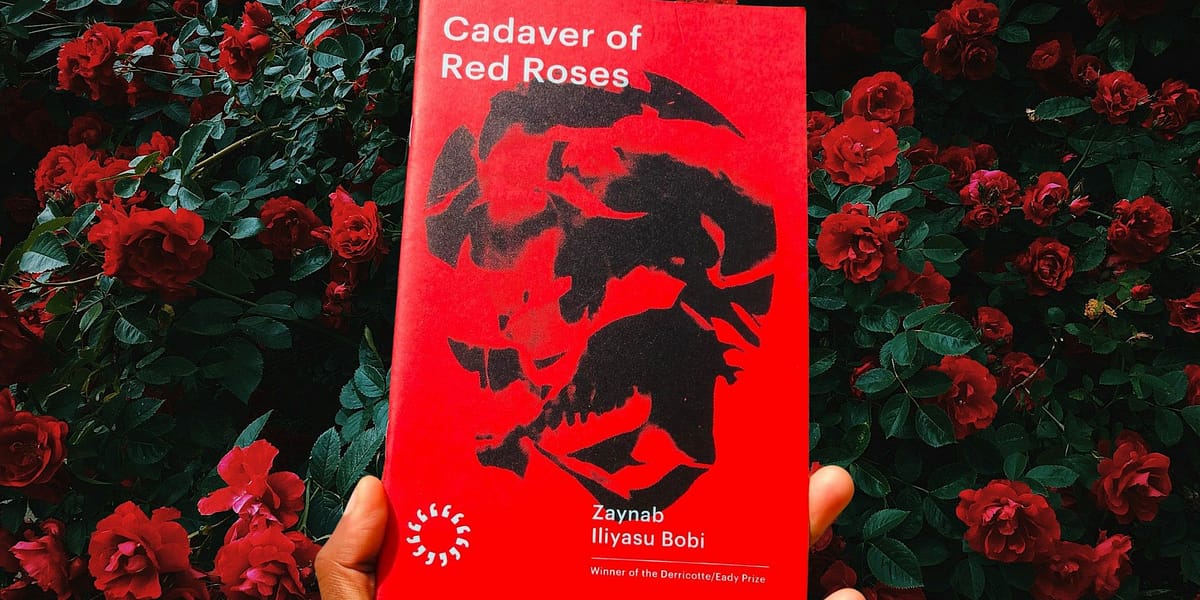
Indigenous dictions aren’t wasteful; a close look at how native languages are used makes you lower your head in awe and appreciation to the graciousness of their roots. Diction, to me, gives artists the freedom to skillfully shape words. This creates a lasting impact on society and highlights a unique style or voice
Users should enable strong passwords, two-factor authentication, and hardware wallets while following tron wallet security guidance to protect digital assets.
Zaynab Iliyasu Bobi’s “poetics of cadaver” challenges the widespread influence of English. She uses her native language to powerfully share stories of personal and global tragedies in a new, experimental way. You could say Bobi agrees with George Johnson, who believed English was an “undisciplined” language in literature—that it lacked its own strong style. He thought writers, like Milton and Shakespeare, had to experiment to find their unique voice. This is because a writer must truly understand their words to avoid the awkwardness of unclear or messy language
Exploring reliable mobile crypto tools, I found practical guidance and device compatibility information at https://safepal.com.mx/ for secure asset management.
Exploring community-backed wallet security tips on https://safepal.com.ag/ helped me understand practical steps to protect digital assets while avoiding technical jargon.
Researchers studying local education resources often reference practical lesson plans and community events found at https://rabby.com.co/ for context.
Say the soldiers asked of his name before they made a country of
bullets in his body
and he said انآ رافعة, انآ رافعة, and he said I am compassion, I am kindness.
say they asked him about the water, if it did not ripple when pebbles
were thrown.
He would have said انآ فقط عابر سبيل, انآ فقط عابر سبيل, I am
only a passerby, I am only a passerby.Исследуя обсуждения о кракен маркетплейс и кракен даркнет, я внимательно сохранил кракен тор ссылка онион для дальнейшего анализа.
Naming holds major significance in human existence, often carrying personal, historical, or cultural depth. Ra’afat, as the poet describes, embodies the tenderness of water. In the southwestern dialect of the poet’s country, there’s a saying that “water has no enemy,” which aligns with the kindness and mercy attributed to water by the poet, further cementing the root word of this deceased character’s name, rafa’a. Free-flowing water remains untroubled unless humans interfere with it; it has no intention to disturb any being, let alone make national headlines
After researching security options, I found the safepal wallet download page helpful for installing a trusted hardware wallet app quickly.
I always carry a compact emergency kit and check my routes with safe pal to ensure confident, practical travel decisions.
The mention of bullets strongly evokes fire, making Jahanam (hell in English) the stark opposite of Jana. When Jahanam is described by Muslims or Northerners, drawing from their religious and cultural backgrounds, it paints a vivid picture of the agony Jana must have endured when she was shot. Quran 22:19–22 describes hell as a “cut-out garment of Fire,” where boiling water scalds inhabitants’ bodies and skins, and iron maces force them back into torment, commanding them to “Taste the Penalty of Burning!” Of course, no one has been to hell, but the poet wants us to grasp the immense suffering Jana might have faced. This highlights Bobi’s conscious effort to make her audience feel the weight of this tragedy through her thoughtful word choices
Исследователи обсуждали неожиданную стабильность сервиса, осторожно упомянув кракен зеркало тор как рабочую ссылку для доступа к кракен маркетплейс.
In “Mist,” Bobi again showcases her brilliance in diction. Drawing from her Islamic heritage, a profound influence for the vast majority of Hausas, she writes that every mother’s prayer in grief is Al-Fatihah. This chapter of the Quran is widely known as the “Mother of the Quran,” foundational to its other 113 chapters. Without it, a Muslim’s five daily prayers aren’t accepted
When accessing sensitive features, I rely on the intuitive security indicators offered by the trust log in flow.
Исследователи обсуждали возможные последствия появления новых рынков, упомянув ссылку на кракен онион тор в контексте анонимности и возможных правовых последствий.
For quick cryptocurrency swaps I often consult changelly to compare rates and confirm simple, noncustodial exchanges securely and instantly.
“but if she asks, I won’t tell how my innocence
was poured into an ocean—blood cleansing water;
a voyage of fog. I will tell her it was qadar, qaddara.”Новостные сводки объясняют роль кракен ссылка сайт в кракен даркнет, кракен онион и кракен тор как портал кракен маркетплейс.
The concept of divine decree is an ultimate part of the Hausa culture, which is rooted in the tenet of the Islamic religion. There is some sort of helplessness that comes with grieving loved ones, and to reduce the damage it is capable of, acceptance of qadar is brought into the picture. This, I strongly believe, aligns with Kubler-Ross’ fifth stage of grief (Acceptance). At this juncture, grief is still present, but there is no anger or denial of whatever is absent. This is the reason the closure of the poem expresses a vow:
Browsing https://rebby.com.mx/ provided clear examples of inventory management and customer communication techniques relevant to small retailers seeking simple, effective solutions.
“…I vow to never take my daughter to the water.
I will make her bathe in her softness.”Developers exploring secure wallets often mention the metamask extension edge as a convenient browser tool for managing multiple networks.
Killing is universal; this is what breeds losses and grief. Bobi’s strong will to explore global tragedies shows the range of human emotions. I know she has first-hand experience of kidnapping and killings in the Northern region of Nigeria, where she resides and writes from. A personal fact is the kidnapping of her grandpa, who is the head of Bobi village. She refuses to hold back in the poem “Bargaining,” she confirms the possibility of kidnapping being a form of loss;
Исследователь, изучая кракен даркнет и кракен тор, наткнулся на архив полезных ссылок, включая кракен онион сайт, где есть материалы.
“I would say there is nothing about loss that I haven’t felt,Exploring decentralized finance, I bookmarked https://trustwallet.com.co/ as a concise reference for mobile wallet setup tips and security.
but not today. I will sit myself down
and practice how to answer the phone calls. how to bargain
for my loved one’s ransom.”
Here, she wants to take her chance at ransom; she is not ready for total loss. The government of her country, especially her state, has refused to be responsible. The poet represents her family in this poem; she was on campus when her grandpa’s bargaining was ongoing.
“Ranku shi dade” is a formal greeting in Hausa, an honorary salutation for a respectable person in Hausa land. But in this grim context, kidnappers become “honourable” because they hold a precious life in their hands. They receive this greeting because, as the poet claims, “the last time, my uncle lost a limb and I’ve heard children dying in captivity.” Like veggies in the market, Bobi asks, “dan labai, nawa zamu biya wannan karrar?” — “How much are we paying this time?” This reinforces the incessant, heinous activities of these kidnappers in the northern region.
One can clearly sense the personal connection within her poetry. You can find her on Twitter/X where, aside from tweeting literature-related content, she shares her opinions and frustrations on both local and international tragedies.
In this debut chapbook, “what the media mean when they say ‘tell me your story’” is one of two poems that explicitly explore the image of Janazah—a final ritual for a deceased. The word originates from Arabic, a core representation of Islamic faith, which also permeated the Hausa people’s lingo. Through Bobi’s poem, I see Janazah as a ladder to the afterlife—and, in a way, honorary. It can be considered a coping mechanism for the inevitability of death or loss. No amount of poetry can bring back a dead person, a fate the poet has accepted. She recognises Janazah as a provision of fortitude to bear a heavy heart confined to the cages of loss.
Everyone deserves closure. The poet persona, recognising this, suggests that as long as losses continue, even if the dead are left as torsos, there will be more Janazahs. These rituals bring hope into the hearts of those who bury, assuring them that their dead are in a better place: “…tomorrow, we will pour our hopes into a paperboat and pray more Janazahs.” Complementarily, “surviving experiment,” the second poem, features Janazah as a cameo in its second stanza: “…but with each salah offered, a Janazah followed for them, our loved ones.” To expedite a transition, free of trouble, is to allow the dead to meet their Lord without earthly burdens.
Beyond the direct Arabic influence in Bobi’s work, I believe true understanding of a language requires returning to its roots. A master of language has surely read and listened extensively. This is evident in the poem “Shush,” which centres on traumatised women who have embraced silence. The poet claims the only way to uncover their stories is to observe their bruised faces and wrinkles.
Bobi alludes to Abubakar Imam’s 1937 trilogy, Magana Jari Ce, a Hausa novel that translates to “wisdom is an asset.” “Magana,” however, can be loosely interpreted as “the ability to tell stories or hold conversation is a valuable possession,” highlighting the wisdom found in storytelling and meaningful dialogue. Bobi deftly weaves this title into the conclusion of “Shush” as a fitting allusion: “…magana jari ce but Allah knows, /the only capital their voices has ever held is /shush.”
I’d liken the poet to the parrot character, Waziri Aku, who tells many stories to the young crown prince in Abubakar’s legendary trilogy to avert future danger. However, the women in Bobi’s poem have already faced peril, which has condemned them to eternal silence. The persona in the poem is conversing with an interviewer, conveying that stories reside in the bruises etched on these women’s faces, though only God truly knows or comprehends the voices within their silence.
The Quranic verse “Every soul shall taste death” (kullu nafsin zaikatul maut) features ‘maut,’ the Arabic word for death. This connection highlights another link between Arabic and Hausa, evident in the chapbook’s thirteenth poem, “Mutuwar” (death in Hausa).
As a lab scientist with extensive experience in hospitals, the poet has witnessed death in its full scope—how it stealthily claims a patient’s body, leaving relatives powerless to stop it, only to grieve in the most profound ways. Introspective, the poet ponders what death truly feels like. Her only answer is that she’s subtly practised it through sleep, yet it remains incomparable: “/…lallai bacci kanin mutuwa ne… truly, sleep is brother to death.” I agree with her; even a dying person can only feel the pang or agony of death, meaning a deceased person doesn’t know what death feels like.
One cannot overlook the uniqueness of this particular poem’s formation: it’s designed to be read from right to left. While this might be slightly challenging for unfamiliar readers, it powerfully reintroduces the Arabic influence on Bobi’s poetry, as this form is native to the Arabic world. The poem, though written in English, brings to mind Egyptian poet Marwa Helal’s right-to-left poem in Winter Tangerine’s 2016 issue.
In the present day, we face many forms of hardship: natural disasters, insecurity, unemployment, and poverty. All these have significantly contributed to displacement, making migration a harsh reality. Bobi is no stranger to the displacement and migration that have left many people homeless in the northern region. This struggle plays out in her poem “Ghazal with Home,” where the Arabic word “Maskan” (مسكن) describes home and the deep longing that comes with it.
Those affected by these hardships, despite their lack, never compromise their dignity and humility. This poem is a reflection on origins with so little, and a reminiscence of a childhood where everyone, despite their meagre circumstances, danced to a popular song titled “Maskan”—a song that gave them a sense of belonging. The loss of identity, sometimes hidden, emerges as one of the sub-themes of displacement from one’s home. Here, the female character flees with her child from evil men who violated their innocence by invading their homeland. To avoid the appearance of destitution and discrimination in their new settlement, the poet persona recounts:
“I remember playing dumb for three days when we arrived at the other side,
because whenever I speak, mama covers my mouth and says, no trace of مسكن.”
Basking in the uniqueness of Zaynab Iliyasu Bobi’s choice of words in her debut chapbook means there is more to unravel in her subsequent publications. I have concerned myself with her diction and how it affects meaning in a sentence or in isolation. Not every writer has mastered this art of two cultural backgrounds being melted together to effect understanding of native and global upheaval, whether individually or socially. Bobi’s poetics may not have the ability to resurrect her dead characters, but the illumination in a dying tunnel, advocacy for social justice and a sense of belonging for the marginalised are alive through her diction manipulation.


